

A survey of hundreds of Floridians found that nearly two-thirds of non-US citizens and one-third of US citizens hesitated to seek medical care.
Author: bioelectric
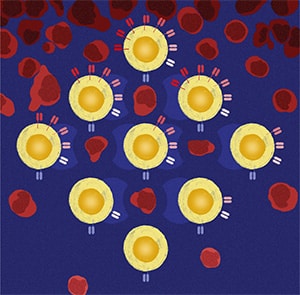
Editors’ Picks, February 2025: Improving CAR T, Studying Breast Cancer Risk, and More American Association for Cancer Research (AACR)
This month, the editors of AACR’s journals show their love for studies about CAR T-cell efficacy, breast cancer risk, and more.
The post Editors’ Picks, February 2025: Improving CAR T, Studying Breast Cancer Risk, and More appeared first on American Association for Cancer Research (AACR).
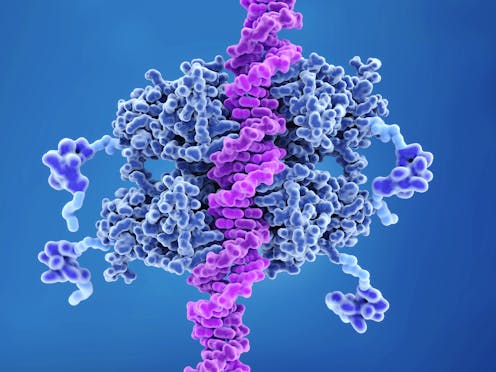
p53 is both your genome’s guardian and weakness against cancer – scientists are trying to repair or replace it when it goes awry Science + Tech – The Conversation
The gene that codes for p53 is the most frequently mutated in cancer. Researchers are targeting different parts of its complex pathway to restore its ability to stop cancer.

Is DOGE a cybersecurity threat? A security expert explains the dangers of violating protocols and regulations that protect government computer systems Science + Tech – The Conversation
News reports paint a frightening picture of DOGE staff trampling time-tested – and in many cases legally required – management and security practices.

Seed oils are toxic, says Robert F. Kennedy Jr. – but it’s not so simple Health – The Conversation
Despite calls from some corners to switch from canola oil and corn oil to beef tallow, the move is unlikely to make Americans healthier.

How the human neck became a locus of power, beauty and frailty Science + Tech – The Conversation
The neck’s vitality and vulnerability are rooted in a quirky evolutionary history.

Are animals smart? From dolphin language to toolmaking crows, lots of species have obvious intelligence Science + Tech – The Conversation
Many animals show signs of high intelligence, including strong memory, self-awareness and communication skills.
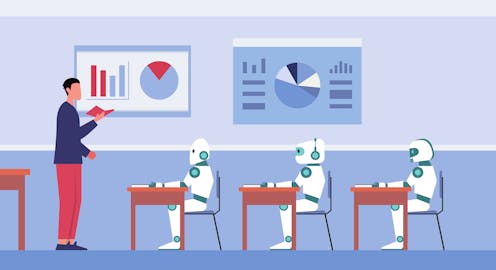
Here’s how researchers are helping AIs get their facts straight Science + Tech – The Conversation
Having AI models say how confident they are in their answers could help minimize inaccurate responses. Just don’t be overconfident about their confidence scores.

Poor sleep and addiction go hand in hand − understanding how could lead to new treatments for opioid use disorder Health – The Conversation
Opioids and other addictive drugs can alter the rhythmic activity of genes involved in sleep-wake cycles.

Art and science illuminate the same subtle proportions in tree branches Science + Tech – The Conversation
Artists and scientists explore how we subconsciously perceive subtle proportions in trees.