

Large language model AIs can ingest long documents and answer questions about them, but a key question is how well they ‘understand’ individual sentences in the documents.
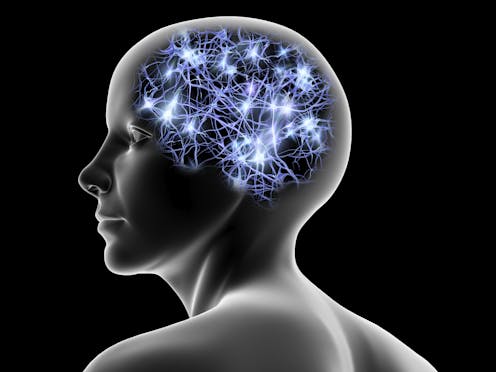
How does your brain create new memories? Neuroscientists discover ‘rules’ for how neurons encode new information Science + Tech – The Conversation
As you experience or encounter new things, your brain must encode this information via the right neural networks at the right time.

All models are wrong − a computational modeling expert explains how engineers make them useful Science + Tech – The Conversation
If an engineer makes an improper assumption while designing something, sometimes the consequences are fatal. An engineering professor explains how to reduce risk.

As views on spanking shift worldwide, most US adults support it, and 19 states allow physical punishment in schools Health – The Conversation
Although millions of US parents approve, decades of research shows that spanking is harmful.

Scientists found a potential sign of life on a distant planet – an astronomer explains why many are still skeptical Science + Tech – The Conversation
The exoplanet K2-18b could harbor a massive ocean, but scientists will need to study the planet more to see if it’s really likely to host life.

Why don’t humans have hair all over their bodies? A biologist explains our lack of fur Science + Tech – The Conversation
Human beings don’t have a thick coat of fur like many other mammals do. Scientists think it has to do with something else that comes out of skin: sweat.

Perfect brownies baked at high altitude are possible thanks to Colorado’s home economics pioneer Inga Allison Science + Tech – The Conversation
A new exhibition at Colorado State University highlights 100 years of women’s work.

Some politicians who share harmful information are rewarded with more clicks, study finds Science + Tech – The Conversation
A study of US state legislators found that posting misinformation online was a winning strategy for boosting a politician’s visibility – but not for Democrats.

From help to harm: How the government is quietly repurposing everyone’s data for surveillance Science + Tech – The Conversation
Under the guise of efficiency and fraud prevention, the federal government is breaking down data silos to collect and aggregate information on virtually everyone in the US.

Gratitude comes with benefits − a social psychologist explains how to practice it when times are stressful Health – The Conversation
Some people are more inclined toward gratitude than others, but there are specific ways that everyone can cultivate more of it.