
Exploring Neospora caninum as a Novel Immunotherapy for Cancer
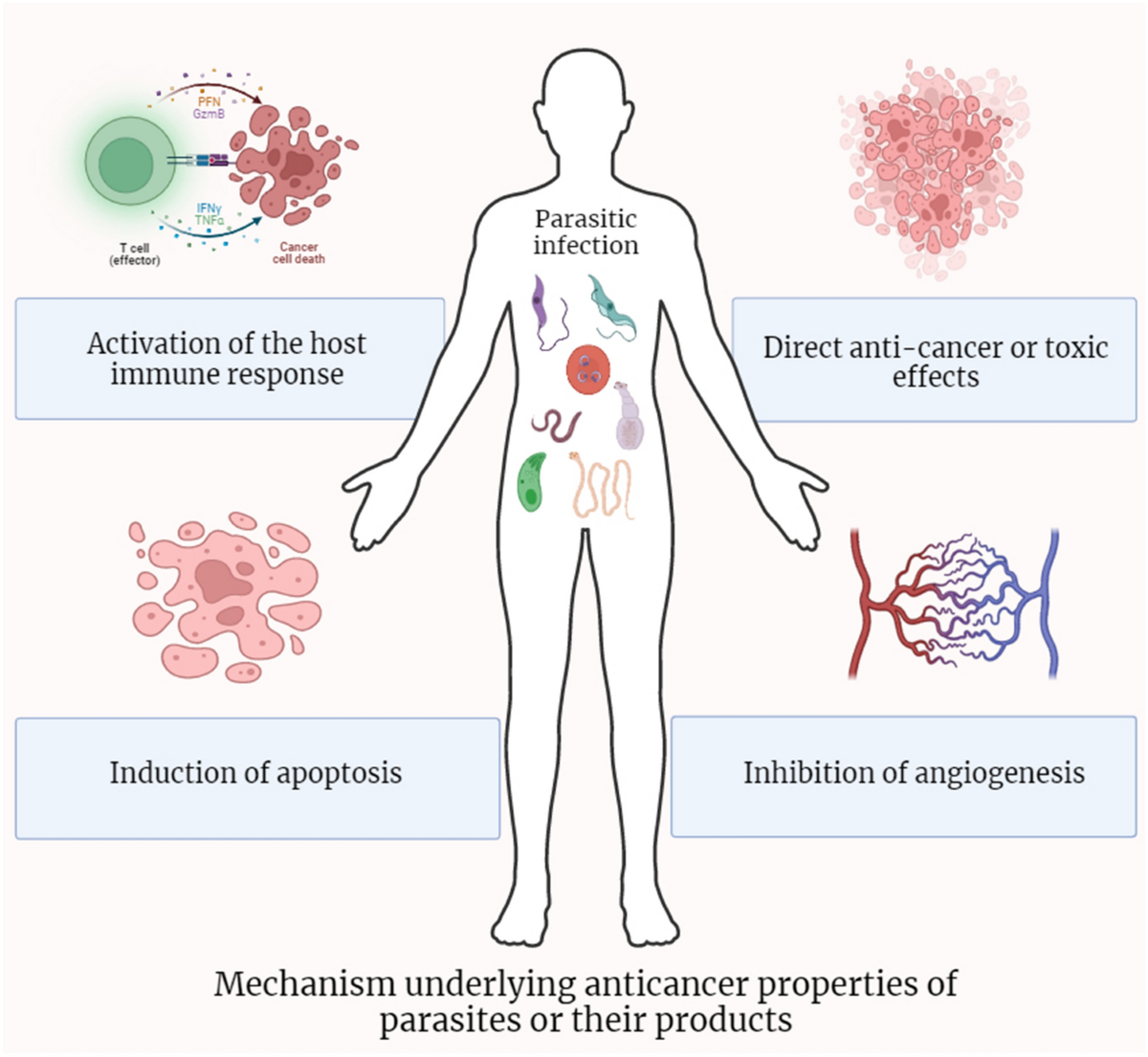
Despite significant advancements in cancer treatment, current therapies often come with high costs and severe side effects, highlighting the need for novel, less toxic alternatives. Recently, growing evidence suggests that certain parasites may have anticancer effects, as researchers observe an inverse relationship between some parasitic infections and tumor growth. Although some parasites can contribute to cancer progression, others appear to counteract it. These organisms may stimulate anticancer effects either by triggering the host’s immune response or by secreting bioactive molecules with therapeutic potential. By activating immune defenses, these parasites may inhibit key processes in cancer development, such as tumor proliferation, angiogenesis, and metastasis.
Sources:
- “Neospora caninum inhibits tumor development by activating the immune response and destroying tumor cells in a B16F10 melanoma model” Parasites & Vectors, 2022
- “Neospora caninum: a new class of biopharmaceuticals in the therapeutic arsenal against cancer” J Immunother Cancer. 2020 Nov 30;8(2):e001242
Recent research on Neospora caninum, a protozoan parasite known primarily as a livestock pathogen or canine disease, has revealed unexpected potential as a cancer therapeutic. N. caninum is a eukaryotic, intracellular pathogen, which means it can enter and survive within host cells. This intracellular property allows N. caninum to penetrate and interact directly with cancer cells, potentially enhancing its antitumor effects. Being eukaryotic, it could potentially be engineered to carry larger therapeutic payloads than bacterial or viral therapies, enabling more complex therapeutic applications. In a study using a mouse melanoma model (B16F10), N. caninum demonstrated promising antitumor effects through immune activation and tumor cell destruction. With its ability to initiate a strong immune response, N. caninum may represent a complementary or alternative treatment to current conventional therapies.
Key Findings from the Study
The study reveals that N. caninum administration, both intratumorally and subcutaneously, led to notable tumor inhibition in mice. The treatment stimulated increased cytokine production (IL-12, IFN-γ, IL-10, TNF-α, and IL-2) within the tumor microenvironment, contributing to a heightened immune response against melanoma cells. Unlike other therapies, N. caninum didn’t induce tumor cell death through apoptosis but may exert a direct lytic effect on cancer cells.
In addition to influencing tumor growth directly, N. caninum treatment had subtle yet observable effects on the gut microbiome of treated mice. The findings suggest a shift toward probiotic bacteria such as Lactobacillus, which is associated with enhanced immune activity. This raises the possibility of a dual mechanism where N. caninum supports antitumor immunity both directly within the tumor microenvironment and indirectly by modifying gut microbiota.
Comparing Neospora caninum Therapy to Conventional Cancer Treatments
To understand N. caninum’s place within the current landscape of cancer therapies, we need to consider both its strengths and limitations compared to established methods such as chemotherapy, targeted therapy, and immune checkpoint inhibitors.
| Aspect | Neospora caninum Therapy | Conventional Cancer Therapies |
|---|---|---|
| Mechanism of Action | Stimulates immune response, promotes T-cell infiltration, and may directly lyse tumor cells. | Chemotherapy: Cytotoxic effect on rapidly dividing cells; Immune checkpoint inhibitors: Unleash T-cell response by blocking inhibitory pathways. |
| Effect on Tumor Microenvironment | Converts “cold” tumors into “hot” tumors with inflammatory TME. | Varies widely; immune checkpoint inhibitors can also ‘heat up’ the TME but depend on prior T-cell presence. |
| Safety Profile | Generally non-pathogenic to humans, although long-term effects need more study. | Well-studied safety profiles, though adverse effects can be severe and dose-dependent. |
| Application Method | Both intratumoral and subcutaneous injections show efficacy. | Typically systemic administration, though localized treatments like intratumoral injections are emerging for certain cancers. |
| Adverse Effects | Minimal observed in animal studies; theoretically controllable with antimicrobial agents if pathogenicity arises. | Immune checkpoint inhibitors: Autoimmune side effects; Chemotherapy: Systemic toxicities affecting multiple organs. |
| Efficacy | Demonstrated tumor inhibition in murine melanoma models, especially with immune enhancement. | Efficacy varies based on cancer type and individual response; chemotherapy shows high initial efficacy but also high recurrence. |
| Impact on Gut Microbiota | Alters gut microbiome composition; increases beneficial Lactobacillus levels. | Immune checkpoint inhibitors and certain targeted therapies can impact gut microbiota but usually not therapeutically. |
| Limitations | Requires further study in human models; pathogen persistence risk. | High recurrence rates, systemic side effects, and often costly for patients. |
Strengths and Weaknesses of Neospora caninum as a Cancer Therapy
Strengths: Neospora caninum appears to effectively “warm up” the tumor microenvironment, transforming it into an inflammatory state conducive to antitumor immunity. This immune activation mirrors, to some degree, the effects achieved by immune checkpoint inhibitors. Furthermore, the treatment’s favorable safety profile and minimal adverse effects make it a compelling candidate for patients who have exhausted conventional options.
Weaknesses: N. caninum is still in preclinical stages, with efficacy only demonstrated in animal models. Additionally, as a live microorganism, there is a potential risk of pathogen persistence, especially in immunocompromised patients. A robust understanding of N. caninum‘s interactions with human cells and its long-term effects will be critical before clinical application.
Conclusion
The study of Neospora caninum represents a novel approach in cancer therapy, where immunostimulation and microbiota modulation work together to combat tumor growth. While challenges remain in translating these findings to clinical practice, N. caninum may one day offer oncologists a low-toxicity option for patients resistant to conventional therapies. Further research will determine whether this unconventional therapy can meet the rigorous standards required for human cancer treatment.